At the 34th Shanghai Teenage Science Innovation Contest, JianXin Yin, Chenchun Dai and RuoQi Yan’s project concerned how dry gecko and lyophilized powders fight against lung cancer, and CongYun Guan, ChenYi Zhou and Wen Ni’s project explored the pathology of psoriasis and how the use of plant-based antibiotics cab serve as an effective treatment. Both teams were awarded the third prize in the Teenage Scientist Innovation Achievement Section.
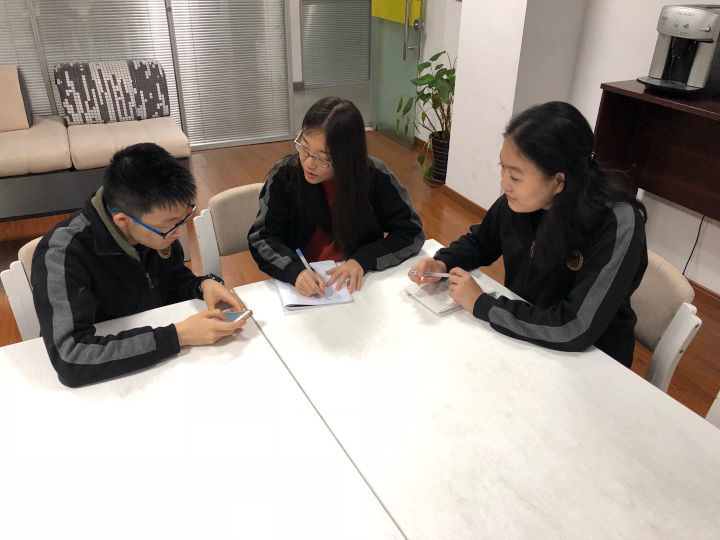
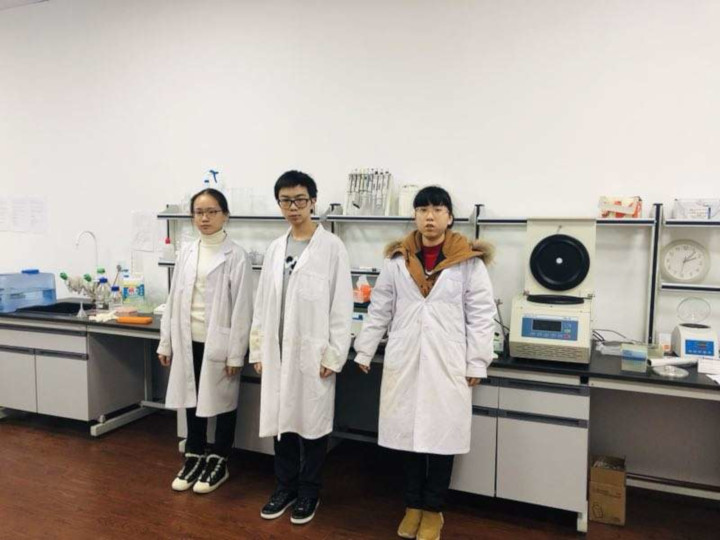
Over the course of six months research, and in discussions with professors from the Chinese Academy of Sciences (CAS), JianXin Yin, Chenchun Dai and RuoQi Yan investigated whether cells from geckos could help humans in the regeneration of human cells and even limbs. As their work progressed and develop, their focus shifted to the ability of gecko cells to regenerate, and then finally to the inhibitory effect of gecko powder on lung cancer cell activity. Through their research, the students discovered that the application of gecko powder in medicine was quite limited. In Chinese medicine, for example gecko powder was not taken seriously. But scientists have held an alternative point of view. Hence, following consultation with and advice from experts at the CAS, the students designed an experiment to test the medical efficacy of the powder. There were three major parts to the experiment: cell decay; cell cycle; and cell proliferation. By looking at these three elements, the students reached their impressive conclusions: gecko powder can inhibit the activity of lung cancer cells in different organic solutions.
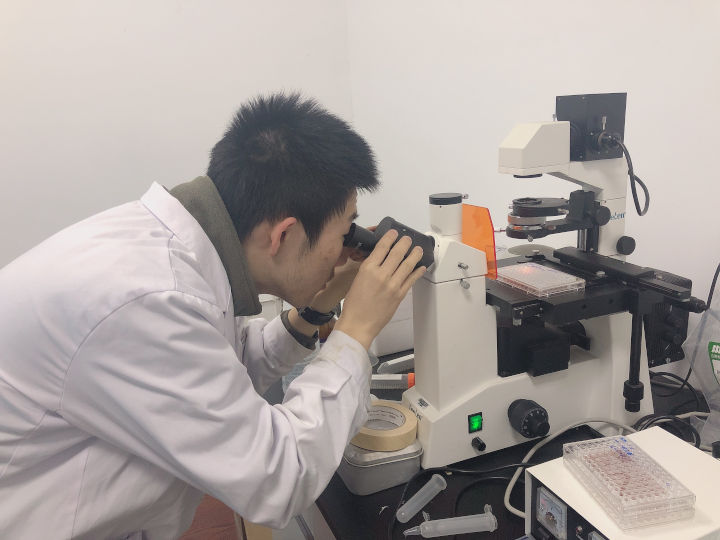
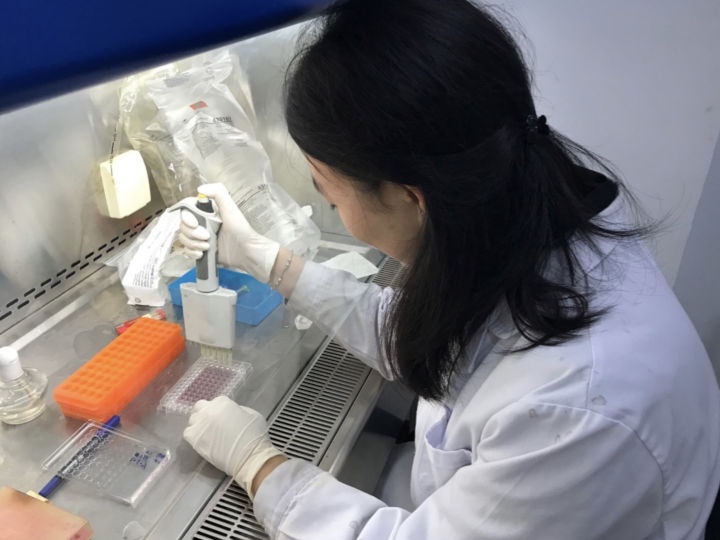
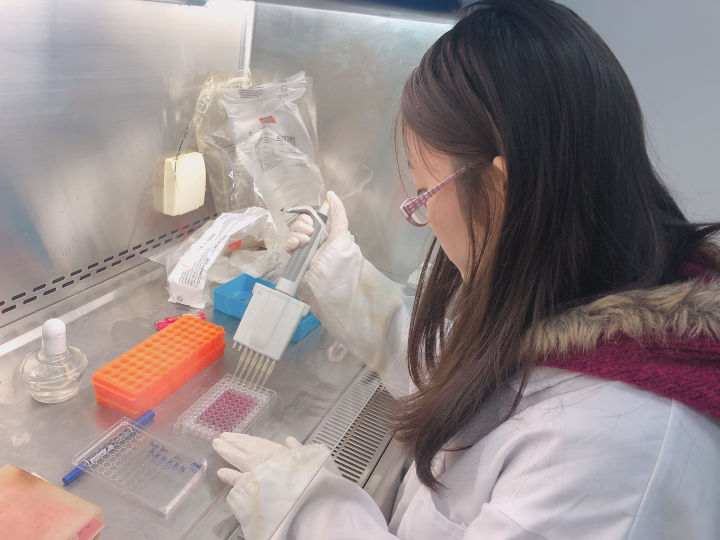
The second team of students, led by CongYun Guan, contained two students for whom this was their first competition, ChenYi Zhou and Wen Ni. These two newcomers felt a little nervous not only because of the high caliber of the students from so many other excellent schools in Shanghai but also because of the intellectual challenge of the projects. The idea for this group’s project came from ChenYi: she remembered her grandfather using a certain ointment, “kushen,” to cure a specific skin ailment, so she had the idea to see if this plant could also be used to treat psoriasis. Informed by extensive reading of domestic and foreign journals, and guided in their thinking by consultations with experts from CAS, the group eventually settled on the working title of “Plant Antibiotics: the Kushen Tincture—a Pilot Study in Curing Psoriasis.” As a result of their experiments, they found that the kushen-based gel could restrain the activity of “HACAT,” thus verifying their hypothesis.
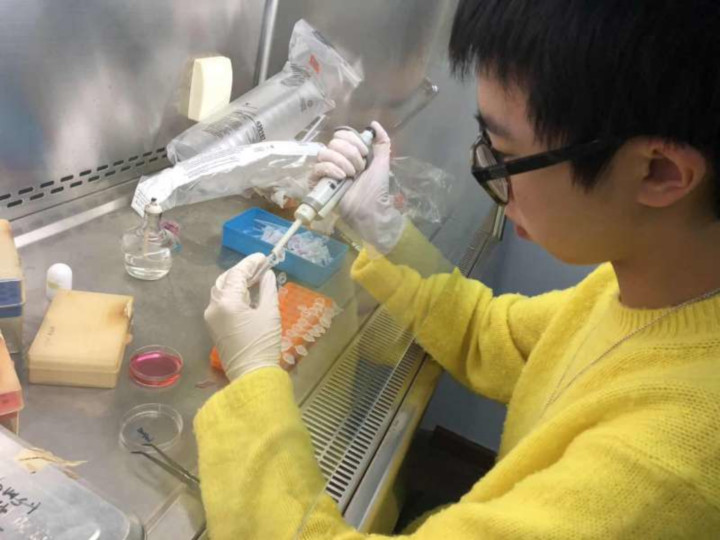
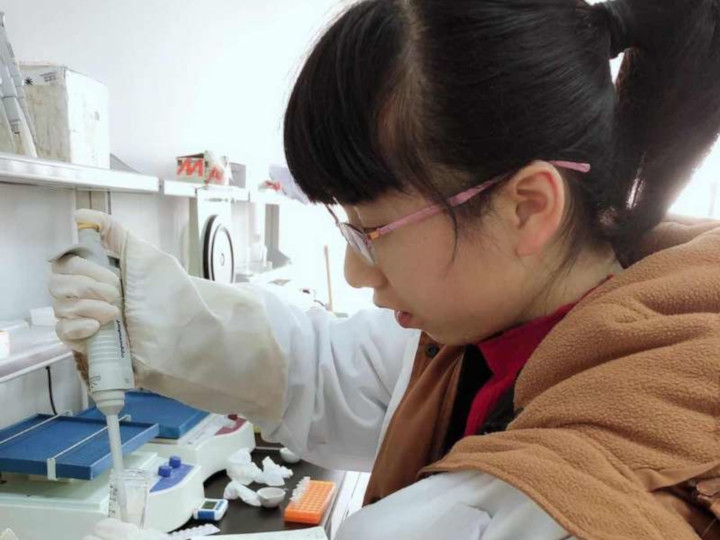
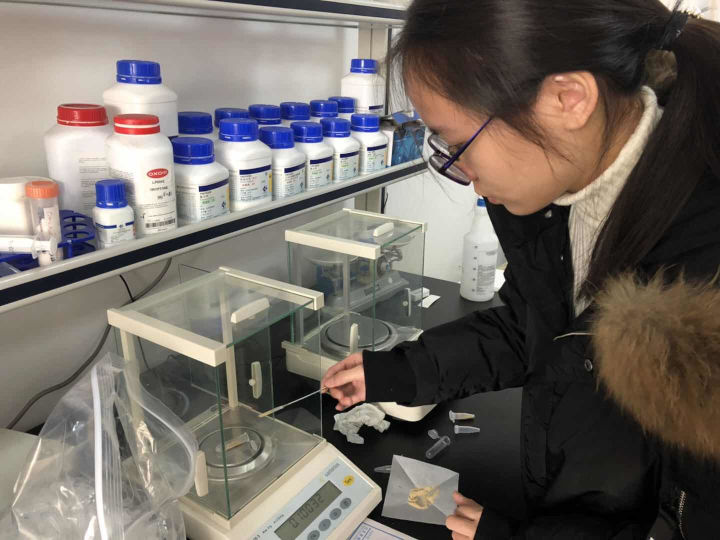
“During this research project, not only have we developed our individual faculties for innovation and responding creatively to an intellectual challenge, but our laboratory skills have also developed significantly. In addition, we each developed a deeper understanding of the scientific method and scientific approaches to problem-solving. Most important of all, however, we learned a clear and valuable lesson about the benefits of teamwork and cooperation, accomplishing more in our group than we ever could have as individuals.”
“At times throughout the process, we hesitated, panicked and even doubted our ability to succeed. When the direction of our research was unclear and the initial results from the experiments were surprising, we questioned ourselves. At other times, we were conscious of our inexperience. We asked ourselves: ‘Can we really do this?’ Such hesitation and doubt can cast a shadow over a students’ future research trajectory. Our teachers at SISU Bilingual School, however, gave us tremendous support and encouragement. The motivation and help from Mrs. Zhou and Mrs. Qi gave us the courage to continue our research and experimentation.
As a result of this support, initial setbacks did not defeat us. In fact, such experiences gave us the focus and courage to carry on, making our steps more firm and more stable.
When the final results came in, we quickly turned from surprise to calm. And now even though the competition is over, we know that our project is still in its initial stages. There are still many questions for us to answer, many avenues for us to explore. Taking part in this competition has lit a fire of curiosity in us that can only be quenched through scientific discovery—and the great thing about science is that when one fire is put out another immediately appears!”