“In my English class at SISU Bilingual school, I was always encouraged and given the opportunity to share and develop my thoughts and comments in seminars and structured discussions—this has helped me a lot in the first year of my university course.”
Grade 12 is a busy year for High School students: completing the requirements of their college applications; personal statements; choosing early decision or early action. Along with all of that, they must keep up with the academic demands of their high school courses.
READING
Although carefully adapted to suit the needs of our students, G12 English is closely aligned with the standards that have been developed as part of the Common Core curriculum in the USA. And our selection of texts and coursework is based on our commitment to providing the best possible preparation for college:
To become college and career ready, students must grapple with works of exceptional craft and thought whose range extends across genres, cultures, and centuries. Such works offer profound insights into the human condition and serve as models for students’ own thinking and writing. Along with high-quality contemporary works, these texts should be chosen from among seminal U.S. documents, the classics of American literature, and the timeless dramas of Shakespeare. [Common Core, G12]
An example of some of the texts studied in G12:
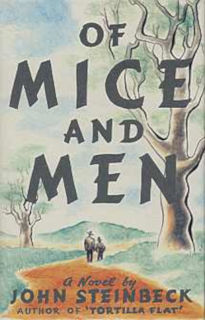
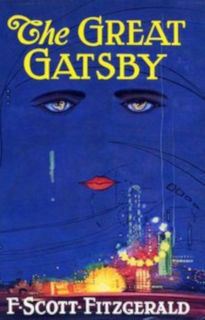
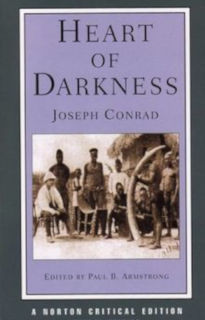
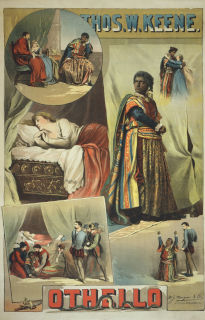
“High-quality literature” is only part of the program. Students spend a significant amount of time studying the major tropes of rhetoric through a variety of classic and contemporary examples of non-fiction texts. Students study a wide range of historical, canonical and contemporary texts: from the Declaration of Independence to Martin Luther King’s “Letter from Birmingham Jail” to a variety of articles from the best contemporary sources: The New Yorker; The London Review of Books; The Atlantic; The Guardian Long Read.
Through wide and deep reading of literature and literary nonfiction of steadily increasing sophistication, students gain a reservoir of literary and cultural knowledge, references, and images; the ability to evaluate intricate arguments; and the capacity to surmount the challenges posed by complex texts. [Common Core, G12]
WRITING
To be college- and career- ready writers, students must take task, purpose, and audience into careful consideration, choosing words, information, structures, and formats deliberately. They need to know how to combine elements of different kinds of writing—for example, to use narrative strategies within argument and explanation within narrative— to produce complex and nuanced writing. They need to be able to use technology strategically when creating, refining, and collaborating on writing. They have to become adept at gathering information, evaluating sources, and citing material accurately, reporting findings from their research and analysis of sources in a clear and cogent manner. They must have the flexibility, concentration, and fluency to produce high-quality first- draft text under a tight deadline as well as the capacity to revisit and make improvements to a piece of writing over multiple drafts when circumstances encourage or require it. [Common Core, G12]
At SISU Bilingual School, we support our students in reaching these high standards in writing through the use of a “writing portfolio”.
Students have the opportunity to draft, redraft and redraft again those pieces of writing in which they have invested a lot of work and reflection. At each stage of the process, students receive detailed feedback that supports their consistent improvement:
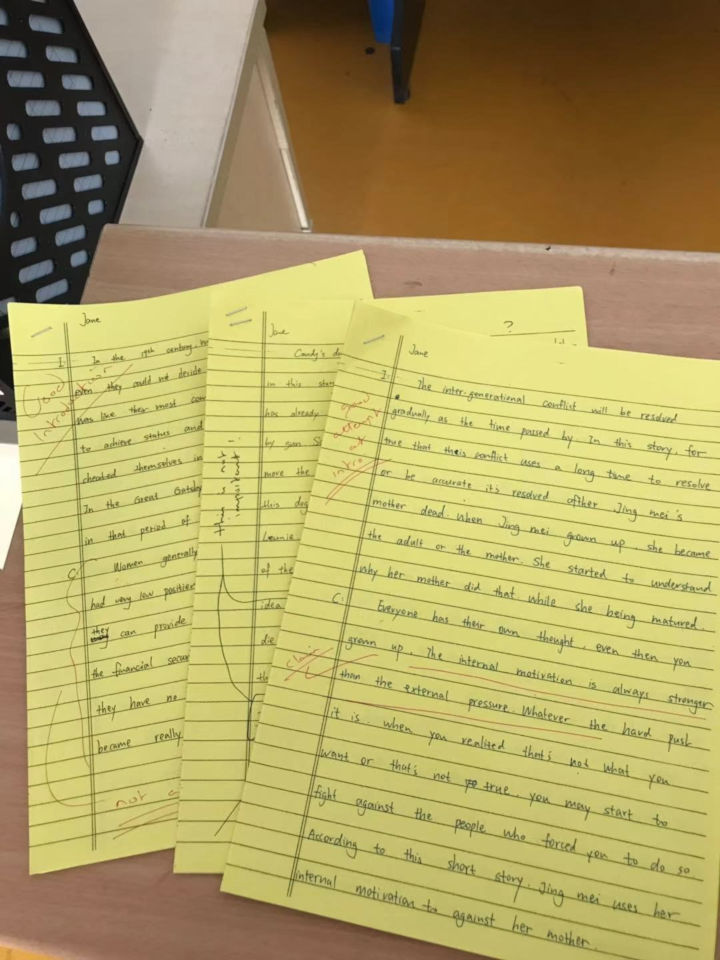
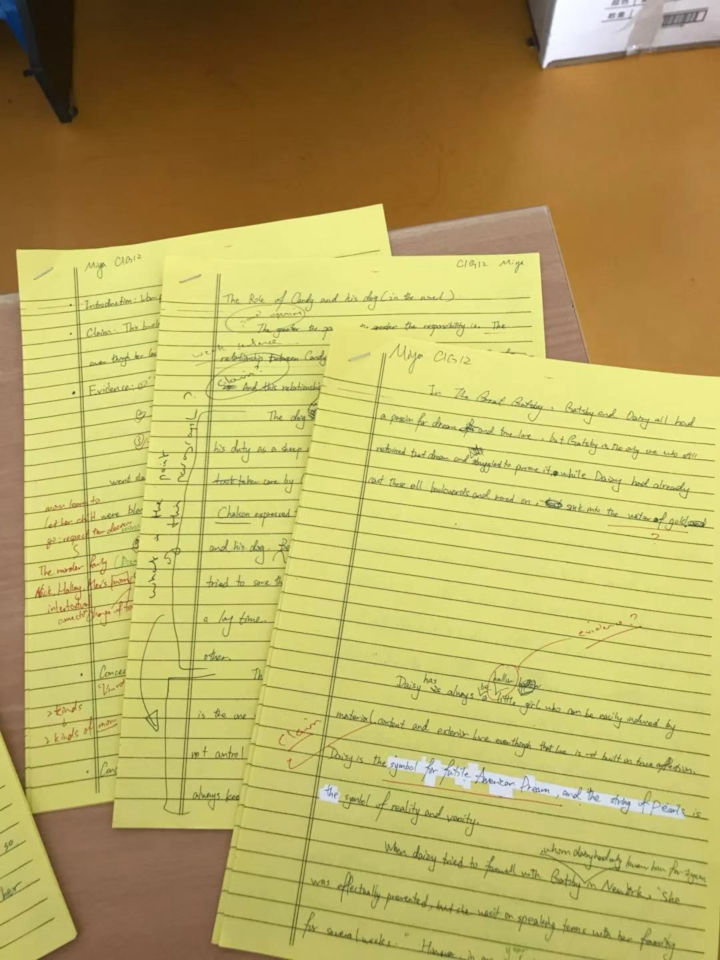
Students are given the space and encouragement to grow and develop in their ability to express complex and sophisticated ideas in their writing:
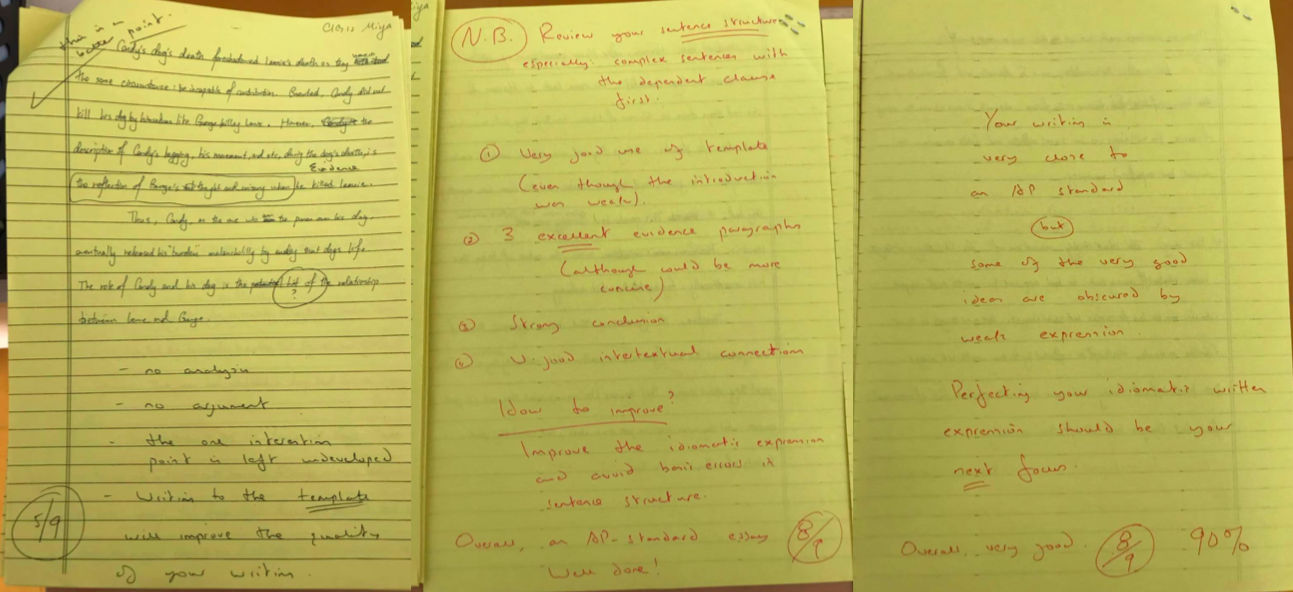
SPEAKING
Another essential element of the G12 course concerns the cultivation of the skills of public discourse:
[Students] must be able to contribute appropriately to these conversations, to make comparisons and contrasts, and to analyze and synthesize a multitude of ideas in accordance with the standards of evidence appropriate to a particular discipline. Whatever their intended major or profession, high school graduates will depend heavily on their ability to listen attentively to others so that they are able to build on others’ meritorious ideas while expressing their own clearly and persuasively. New technologies have broadened and expanded the role that speaking and listening play in acquiring and sharing knowledge and have tightened their link to other forms of communication. The Internet has accelerated the speed at which connections between speaking, listening, reading, and writing can be made, requiring that students be ready to use these modalities nearly simultaneously. Technology itself is changing quickly, creating a new urgency for students to be adaptable in response to change. [Common Core, G12]
At SISU Bilingual School, we know the best way for a student to learn is for the student to become the teacher:
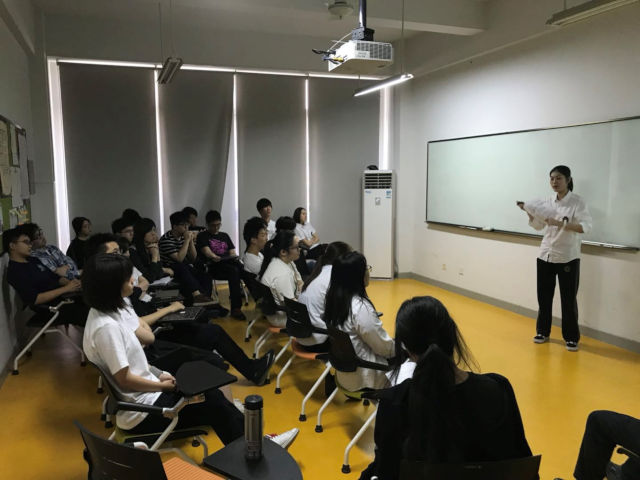
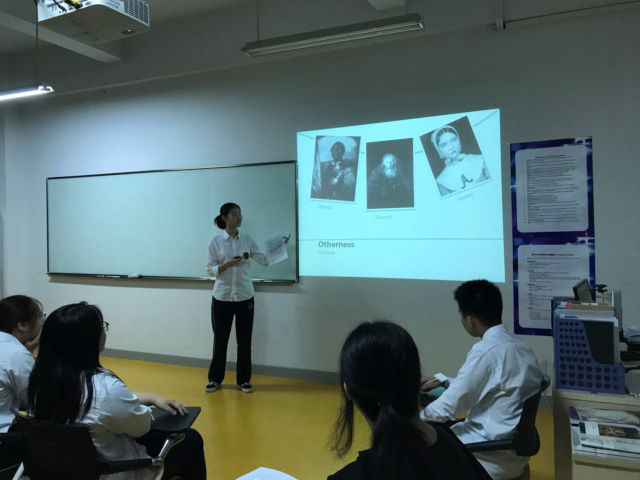
We encourage our students to:
– Find an area of interest.
– Build real knowledge and expertise
– Share this with their fellow students
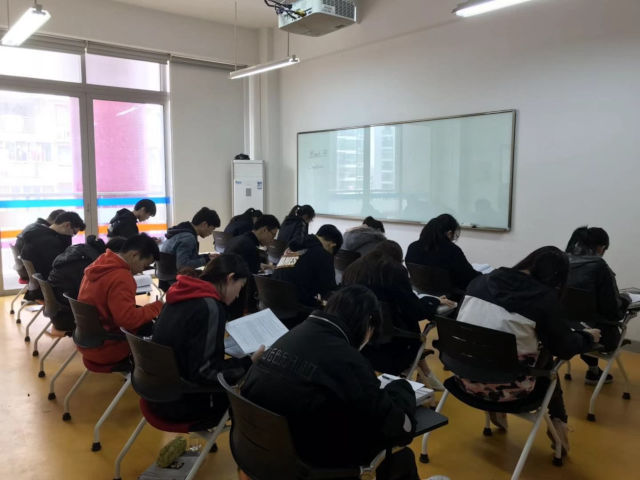
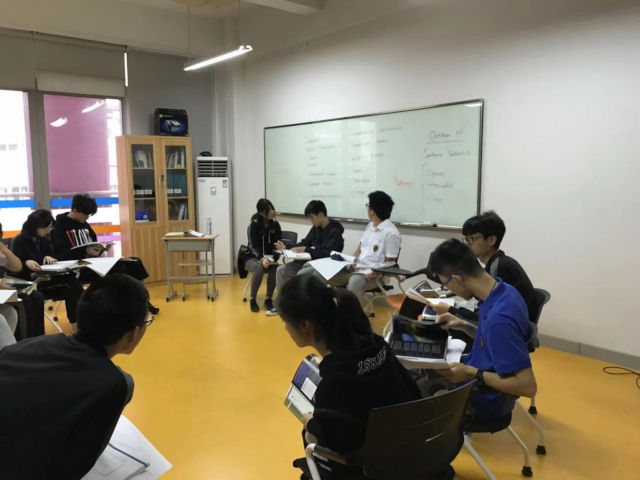
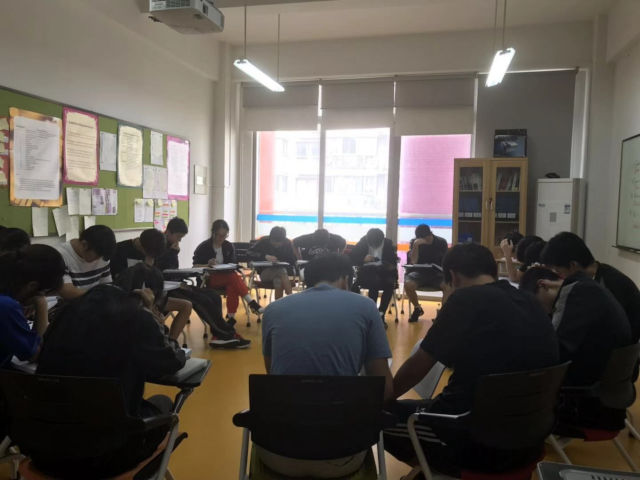
SEMINARS
1. Students prepare their individual contribution.
2. The conversation begins, with the teacher acting only as a kind of referee.
3. Students engage with each other, discussing, agreeing, disagreeing and arguing.
4. Students leave the seminar having increased their knowledge of the subject and having grown in confidence speaking English in public.
By the end of the course our students are ready for college and have the opportunity to sit the AP English exams.
The AP English program from the College Board © offers
two courses in English studies, each designed to provide high school students the opportunity to engage in a typical introductory-level college English curriculum. The AP English Language and Composition course focuses on rhetorical analysis of nonfiction texts and the development and revision of well-reasoned, evidence-centered analytic and argumentative writing. The AP English Literature and Composition course focuses on reading, analyzing, and writing about imaginative literature (fiction, poetry, drama) from various periods. (AP English Course Description)
requires students to become skilled readers of prose written in a variety of rhetorical contexts and skilled writers who compose for a variety of purposes. Both their reading and their writing should make students aware of interactions among a writer’s purposes, reader expectations, and an author’s propositional content, as well as the genre conventions and the resources of language that contribute to effectiveness in writing.
At the heart of an AP English Language and Composition course is the reading of various texts. Reading facilitates informed citizenship and thus increases students’ capacity to enter into consequential conversations with others about meaningful issues. Also contributing to students’ informed citizenship is their ability to gather source materials representing particular conversations and then make their own reasonable and informed contributions to those conversations. Students’ ability to engage with outside sources in their reading, writing, and research is an important measure of their intellectual growth. (AP English Course Description)
The complete course introduction is here.
engages students in the careful reading and critical analysis of imaginative literature. Through the close reading of selected texts, students deepen their understanding of the ways writers use language to provide both meaning and pleasure for their readers. As they read, students consider a work’s structure, style and themes, as well as such smaller-scale elements as the use of figurative language, imagery, symbolism and tone. (AP English Course Description)
Reading in an AP course is both wide and deep. This reading necessarily builds upon and complements the reading done in previous English courses so that by the time students complete their AP course, they will have read works from several genres and periods — from the 16th to the 21st century. More importantly, they will have gotten to know a few works well. In the course, they read deliberately and thoroughly, taking time to understand a work’s complexity, to absorb its richness of meaning, and to analyze how that meaning is embodied in literary form. In addition to considering a work’s literary artistry, students reflect on the social and historical values it reflects and embodies. Careful attention to both textual detail and historical context provides a foundation for interpretation, whatever critical perspectives are brought to bear on the literary works studied. (AP English Course Description)
The complete course introduction is here.